Information-driven organization in robotic swarm
Intelligence is not only a property of individuals—it can also emerge from how they exchange information and organize collectively. As AI agents increasingly interact, questions arise about how they form communities, divide responsibilities, and develop leaders. We bring these questions into the physical world: how can leadership and cooperation emerge among “physical AI agents”—robots that sense, communicate, and act on their surroundings?
Our starting point is a tradeoff between “thinking” and “working.” A robot can spend time and energy learning about its environment, or use those resources to move, transport objects, and perform other tasks. Sharing information allows some robots to benefit from what others have learned, potentially creating a division between information producers and physical workers. We study this as a problem in nonequilibrium physics: how local interactions and feedback give rise to collective organization. Using simulations and robotic swarms, we ask when sensing remains distributed, when a few influential specialists emerge, and how these patterns change as the environment becomes more uncertain.
Our goal is to uncover physical principles linking information, collective behavior, and useful work. By understanding how organization emerges—and when it breaks down—we aim to develop robotic matter that can adapt its roles and coordination to changing conditions.
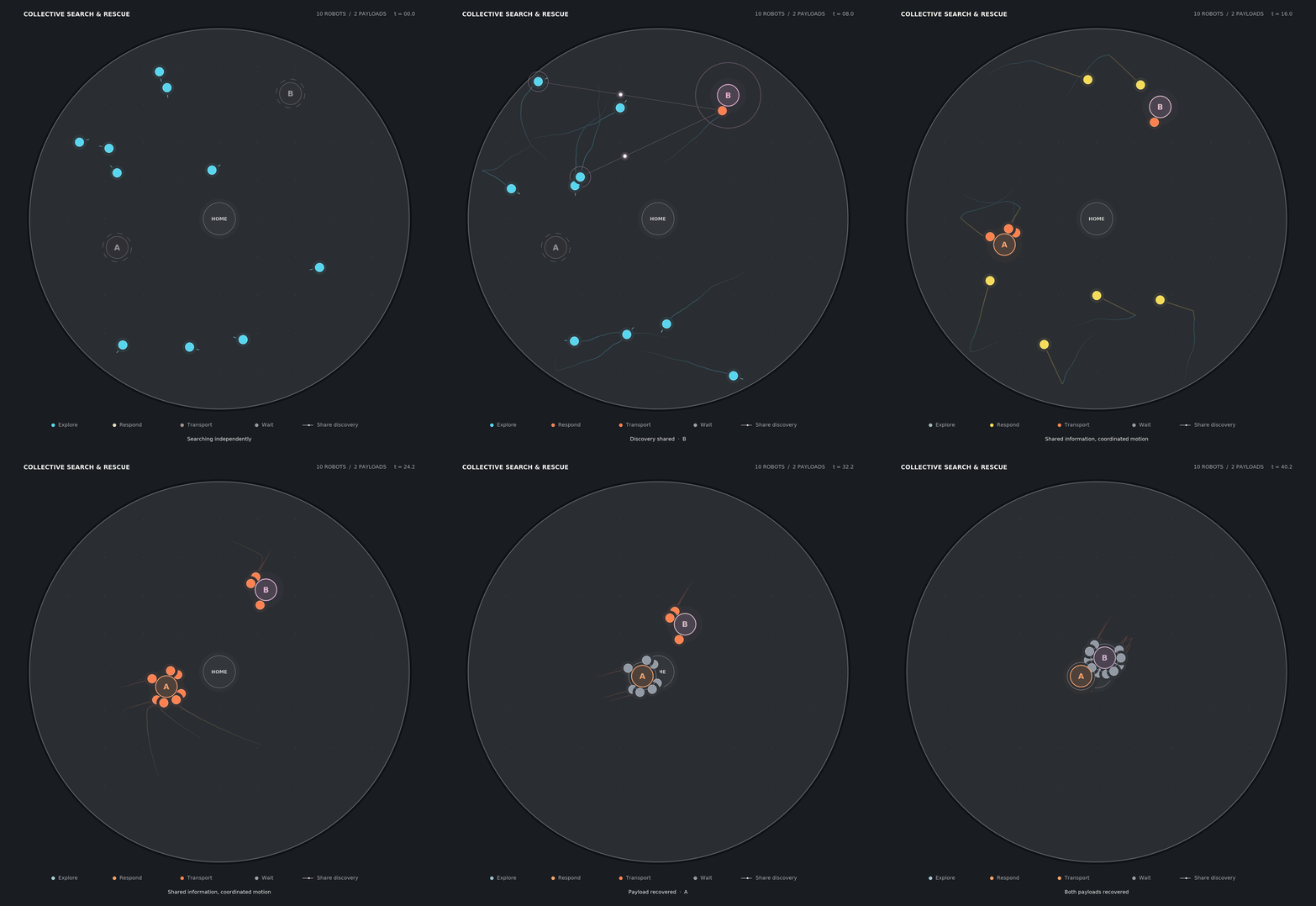
Information exchange drives the emergence of coordinated behavior and collective organization in robotic swarms.